
Start with the way the customer will take strap from the pack
A distributor can approve the right metal strap and still receive a difficult product to sell. A coil that unwinds in transit, a dispenser box that snags the strip, or an outer carton with an ambiguous quantity can create returns and warehouse errors. These are packaging problems, not changes to the strap's width or hole pattern.
Before asking for a package design, define the selling unit. Will a contractor buy one roll, one dispenser box, or a full case? Will a store display the unit on a shelf, while a supply house ships individual units from an opened case? The answers determine which surfaces need a label, how the strip should feed, and what must survive parcel handling.
The manufacturer's perforated hanger strap product page shows coils, dispenser-style packages and customized packaging options. Treat those as formats to discuss for a specific SKU, then confirm dimensions, artwork and packing quantity before approval.
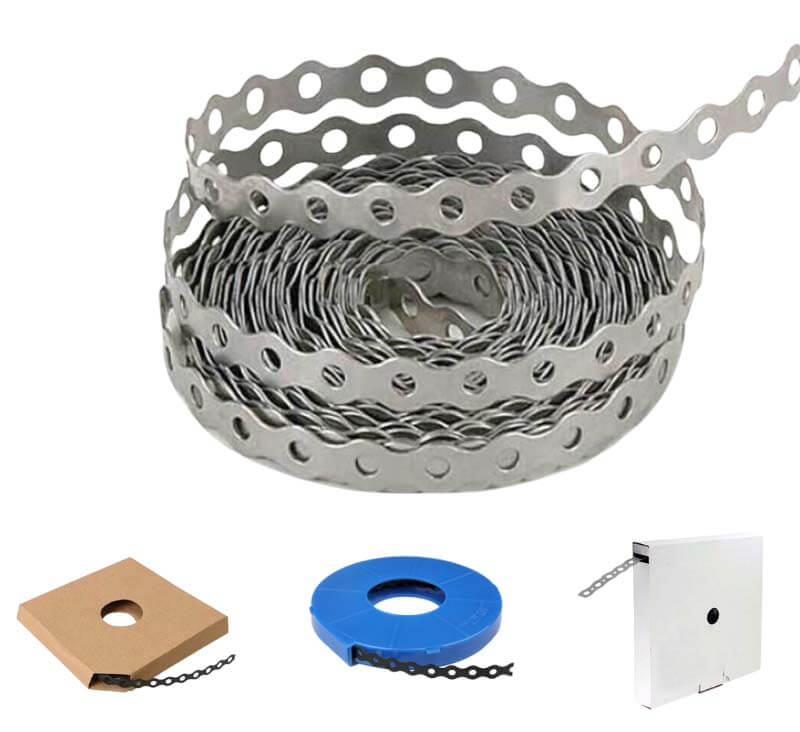
Choose a selling format before designing the artwork
An exposed roll lets a buyer see the material and hole pattern immediately. The packaging brief still needs to say how the coil is restrained, whether the loose end is secured, and where the product label sits. Ask for a packed sample, because a neat product photograph cannot show how the roll behaves after a carton is opened.
A dispenser box can help an installer pull out and cut the length needed without handling the entire coil. Its opening must suit the actual strap width and edge profile. During approval, pull several lengths from a production-representative sample, stop and restart the feed, and inspect the exit point for catching or damage. Also check whether the box stays stable as the roll becomes lighter. A box that looks good when full may behave differently near the end of the roll.
An outer case is a logistics unit, not necessarily the unit your customer buys. State the number of selling units per case and whether mixed SKUs are allowed. For a warehouse that picks individual boxes, the inside units need their own identification. For a distributor that reships sealed cases, the outer label must identify the contents without opening the carton.
Do not assume one format works for every roll length or strap thickness. The packed coil diameter, weight and feeding behavior should be checked on the proposed product configuration.
Put the same SKU on every level that can be separated
The most common packaging mistake is treating artwork as decoration. A buyer needs to identify a unit after it has been removed from its shipping carton. A practical label master should connect the commercial SKU to the actual strap specification.
For each selling unit, decide which of these fields are required by your channel:
- Product name that distinguishes perforated hanger strap from solid packaging steel strapping.
- Distributor SKU and, if useful, the manufacturer's reference code.
- Finished width, actual thickness, nominal roll length, material and finish.
- Unit system expected by the US customer; show an agreed metric equivalent where it helps receiving inspection.
- Barcode supplied or approved by the distributor, with enough quiet space and contrast to scan on the final print.
- Brand artwork, product image, lot or batch identifier, and any applicable origin or compliance wording reviewed by the buyer's team.
Use a separate outer-case label if the case can be stored or shipped independently. It should repeat the SKU, description, quantity of selling units and any warehouse identifiers needed for receiving. Do not copy an origin statement, load claim or certification badge from an old design without checking that it applies to the exact product and shipment.
Test the package as a working product
Request a physical packaging sample with the proposed strap inside it. An empty box proves little about feeding, fit or transport protection. The approval trial should match the way the distributor will handle the product:
1. Identify it: Can warehouse staff read the SKU and quantity on the sealed case and on one removed selling unit? 2. Open it: Does the package open without tearing the information needed for resale or use? 3. Dispense it: If there is an exit hole, does the strap feed, stop and restart without catching, twisting or pulling the whole coil out? 4. Handle it: Is the free end controlled, and are exposed edges managed in a way suitable for the intended channel? 5. Repack it: After one unit is removed, can the remaining units still be identified and stored in the case? 6. Scan it: Test the printed barcode on the actual finished material and curved or folded surface where it will appear.
Record failures with photographs and the sample revision. For example, “strap catches after the second pull” is more actionable than “improve the box.” The next sample can then be checked against the same observation. If a shipping or drop test matters to your channel, agree on its method and acceptance criteria before ordering; a generic claim that packaging is “strong” is not a test result.
Control artwork and packing changes like product changes
Packaging revisions can affect purchasing even when the metal strap is unchanged. A new box dimension may alter case quantity or warehouse slotting. A revised label can break a barcode or cause the wrong SKU to be picked. Keep one approved package specification for each SKU, including the box drawing, artwork version, label position, units per case and a retained signed sample.
Before mass production, compare the final preproduction sample with that approved package specification. If the supplier proposes a different carton board, closure, roll orientation or case quantity, ask for a written deviation and decide whether the change needs another physical approval. This is especially useful for repeat orders and private-label ranges with many similar-looking widths or lengths.
Send a packaging brief the factory can quote
The next inquiry should contain both the strap specification and the intended selling format. Include the target channel, nominal roll length, desired selling-unit package, units per outer case, label and barcode files, language and units, artwork owner, quantity, and any sample or transport checks you require. Mark fields where the manufacturer may recommend an option instead of treating every blank as a fixed requirement.
If you are comparing multiple suppliers, send the same packaging brief to each one. A low price per roll may describe a bare coil while another quotation includes a printed dispenser box and case label. Compare like with like before selecting a sample.
For a proposal tied to your specific strap and channel, send the specification and packaging brief. Ask for a packed sample and approve that sample before a bulk order. That gives your team a practical reference for receiving, shelf presentation and repeat purchases.