
Two Products, One Word: Why Distributors Get Them Mixed Up
The perforated hanger strap vs tube strap question is simpler than it looks, and getting it wrong is expensive: ask a new purchasing clerk for “steel strap” and you may receive either of two completely different products — a perforated hanger strap with punched holes for hanging pipe from ceilings, or a solid tube strap, hole-free steel banding for bundling tubes and pipe onto pallets for transport. They share material and a word in their name, and almost nothing else: one is fastened with screws, the other is tensioned and sealed; one carries a building service, the other secures a shipping load. We wrote this guide because we watch distributors quote the wrong product, or worse, ship it — and the difference is discovered by the customer holding a roll of banding that has nowhere to put a screw.
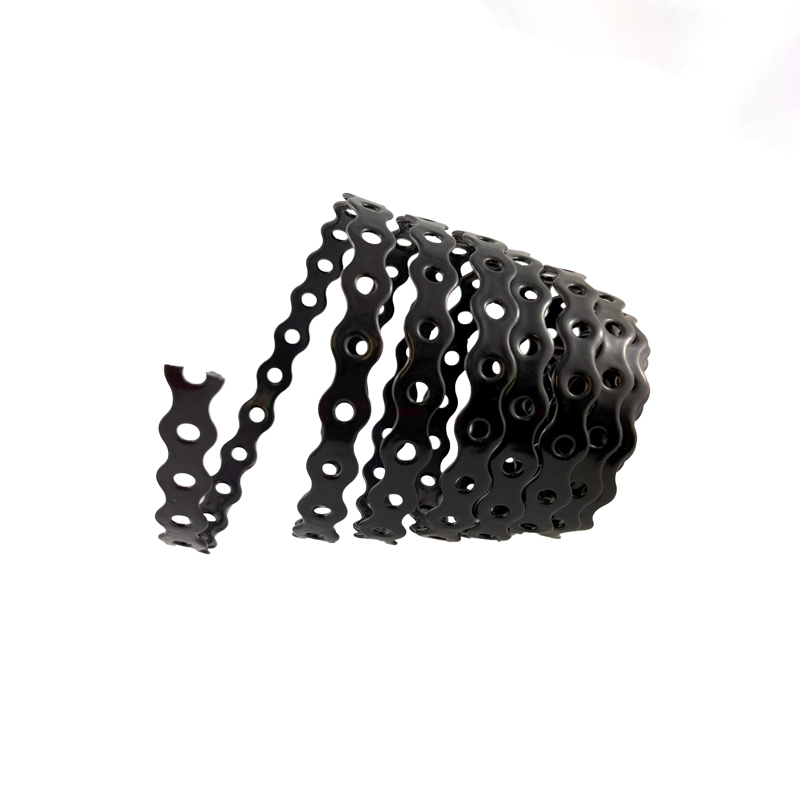
What a Perforated Hanger Strap Is
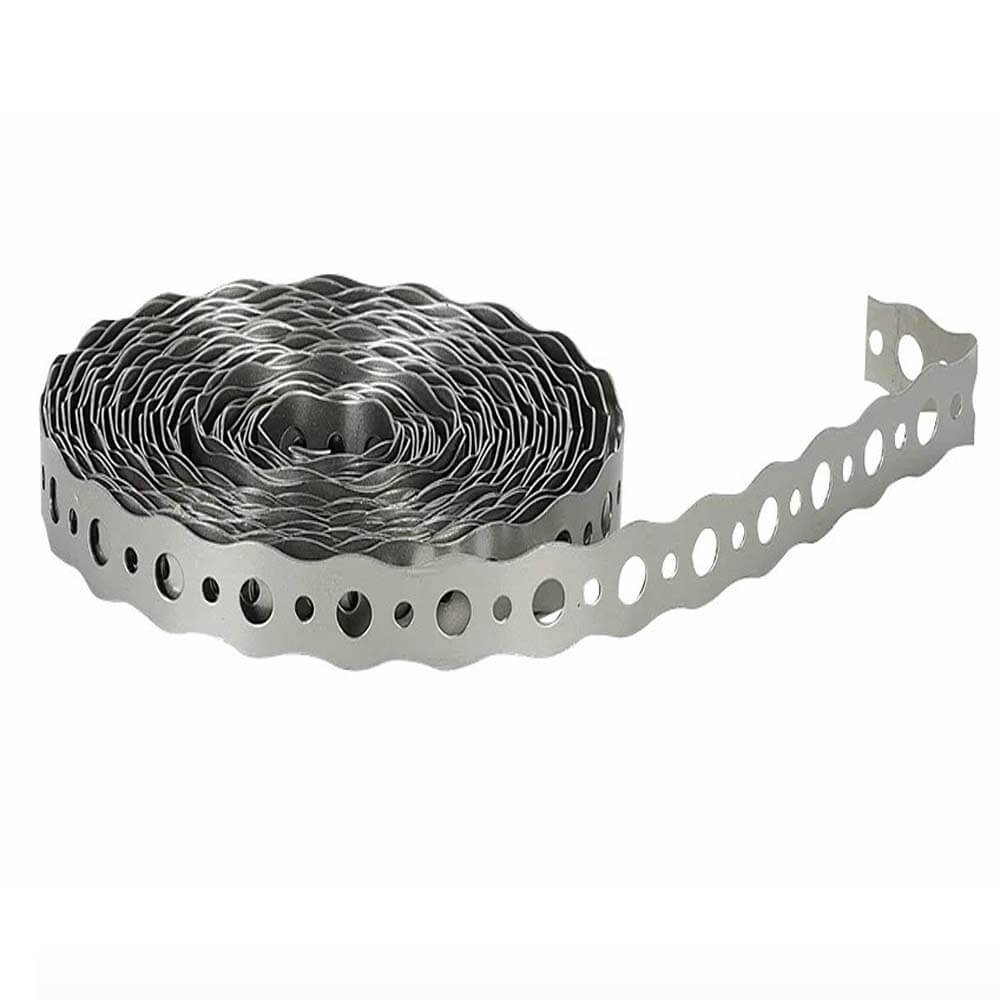
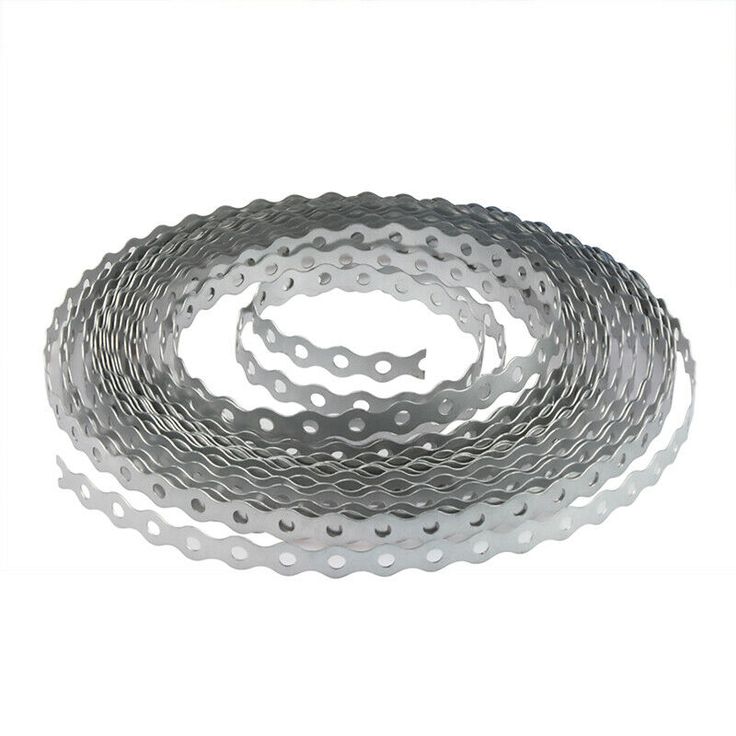
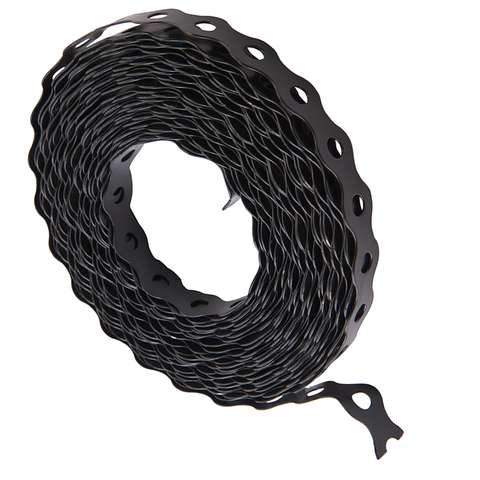
A perforated hanger strap is a galvanized steel band, typically 1/2 in to 1 in wide in 24–28 gauge, punched with 3/16 in holes on 1 in centers along its entire length. The holes are the product: screws or nails pass through at any point, so installers cut the strap to length on site and hang pipe, duct, and conduit without pre-drilling. It is sold in retail rolls (10 ft, 25 ft, 50 ft, 100 ft) and bulk coils, with a straight or wavy edge, and it is consumed by HVAC, plumbing, and electrical trades. The working load of a 3/4 in × 24 gauge strap is about 300 lbf at a 3:1 safety factor.
What a Tube Strap Is
A tube strap — also called steel banding, banding iron, or packing strap — is a solid, hole-free steel band used to bundle steel tubes, pipe bundles, lumber, and other rigid goods into shipping units. It is pulled tight with a tensioner, joined with a seal or buckle (not a screw), and cut with a strap cutter. Typical sizes for tube bundling run 19 mm (3/4 in) and 32 mm (1-1/4 in) wide in 0.6–1.0 mm thickness, in regular-duty, high-tensile, galvanized, or black finished grades, supplied in ribbon-wound or oscillated coils for automatic strapping machines. The failure point of the system is the seal joint, which holds 70–80% of the band’s break strength — a concept that simply does not apply to a perforated hanger strap.
Perforated Hanger Strap vs Tube Strap: The Differences That Matter
- Holes: hanger strap is punched; tube strap is solid. If the quote says “with holes,” it is never tube strap.
- Job: hanger strap hangs and supports; tube strap bundles and unitizes for transport.
- Fastening: hanger strap uses screws or nails through the holes; tube strap uses a tensioner plus metal seal, buckle, or spot weld.
- Width and gauge: hanger strap is thin (24–28 ga, 0.015–0.024 in); tube strap runs thicker (0.6–1.0 mm / 23–20 ga equivalent) because bundling tension is far higher than a hanging load.
- Packaging: hanger strap sells as retail rolls or coils; tube strap sells as ribbon-wound or oscillated coils sized to a strapping machine.
- Buyer: hanger strap goes to contractors and wholesalers; tube strap goes to tube mills, pipe distributors, and packaging lines.
See our perforated banding guide and the galvanised banding overview for the two product families in detail.
Specifications Side by Side
- Width: hanger strap 1/2–1 in (12.7–25.4 mm); tube strap 3/4–2 in (19–50 mm), with 19 mm and 32 mm standard for tube bundling.
- Thickness: hanger strap 24–28 gauge (0.015–0.024 in); tube strap 0.6–1.0 mm (roughly 23–20 gauge), because bundling tension far exceeds a hanging load.
- Surface: both galvanized (G30/G60/G90) — but tube strap also comes black finished and high-tensile for heavy bundles.
- Tools: hanger strap needs only snips and a screwdriver; tube strap needs a tensioner, sealer, and strap cutter.
- Coil form: hanger strap in retail rolls (10–100 ft) or bulk coils; tube strap in ribbon-wound or oscillated coils that feed automatic strapping machines.
- Price structure: hanger strap quoted per roll, per 100 ft, or per kg; tube strap quoted per kg or per coil at a specified length and weight.
What the Confusion Costs
We have seen the same story play out with a US plumbing wholesaler: an order for “3/4 in galvanized strap” was filled with banding coils because the RFQ said only that. The freight back, the customs paperwork, and the six-week replacement lead time cost more than the goods themselves — and the customer’s shelves sat empty through a selling season. The cost of the mix-up is never the product; it is the time. And time is the one thing a distributor cannot buy back from a supplier.
RFQ Example: Bad vs Good
Bad: “Please quote 100 rolls of 3/4 in galvanized steel strap.” — Nothing in this line identifies either product.
Good: “Quote 100 rolls of perforated hanger strap, 3/4 in wide, 24 gauge, galvanized G60, 3/16 in holes on 1 in centers, wavy edge, 100 ft per roll, for hanging pipe from joists, screws through holes.” — Every field in this line is measurable, and only one product line can satisfy it.
How the Mix-Up Happens — and How to Stop It
In our order inbox, the confusion almost always starts with the word “strap” used alone, a photograph that shows only a coiled band, or a buyer reusing an old RFQ template from the other product line. The fix costs one paragraph. State the application (“hanging 2 in steel pipe from a ceiling” versus “bundling 6 m tube bundles for export”), state the fastening (“screws through punched holes” versus “seals and tensioner”), and state the packaging you resell (“retail rolls” versus “machine coils”). Adding hole diameter and pitch — 3/16 in on 1 in centers — eliminates ambiguity instantly, because only one product has holes. A distributor RFQ that names these four fields cannot receive the wrong strap, and the supplier knows exactly which production line to schedule. Full dimensional references are on our specification page.
Distributor’s Quick Checklist
- Application stated: hanging or bundling?
- Holes required: yes or no? If yes — diameter and pitch?
- Fastening: screws, or seals and tensioner?
- Width, thickness, finish: galvanized G60, black, or high-tensile?
- Packaging: retail rolls, ribbon-wound coils, or oscillated coils?
- Quantity: pieces, feet, or kilograms — unit-confirmed on the quote?
Conclusion
The perforated hanger strap and the tube strap are both steel, both coiled, and both called “strap” — which is exactly why the specification, not the photograph, must decide the order. Name the application, the holes, and the fastening method, and the two products can never trade places again. For both product lines, download current product catalogs or send your RFQ through the contact page — the substrate steel for galvanized grades is produced to ASTM A653.