
When buyers ask for perforated hanger strap, the inquiry often looks simple: “Please quote 1 inch galvanized hanger strap roll.” But for production, pricing, packaging, and repeat orders, this is usually not enough.
A clear specification should include width, gauge or thickness, hole diameter, hole spacing, roll length, material, surface finish, and packaging method. If one of these details is missing, two suppliers may quote products that look similar in photos but perform very differently on the jobsite.
This guide is written for HVAC distributors, hardware wholesalers, contractor supply buyers, and private label customers who need to turn a general product request into a clear purchasing specification.
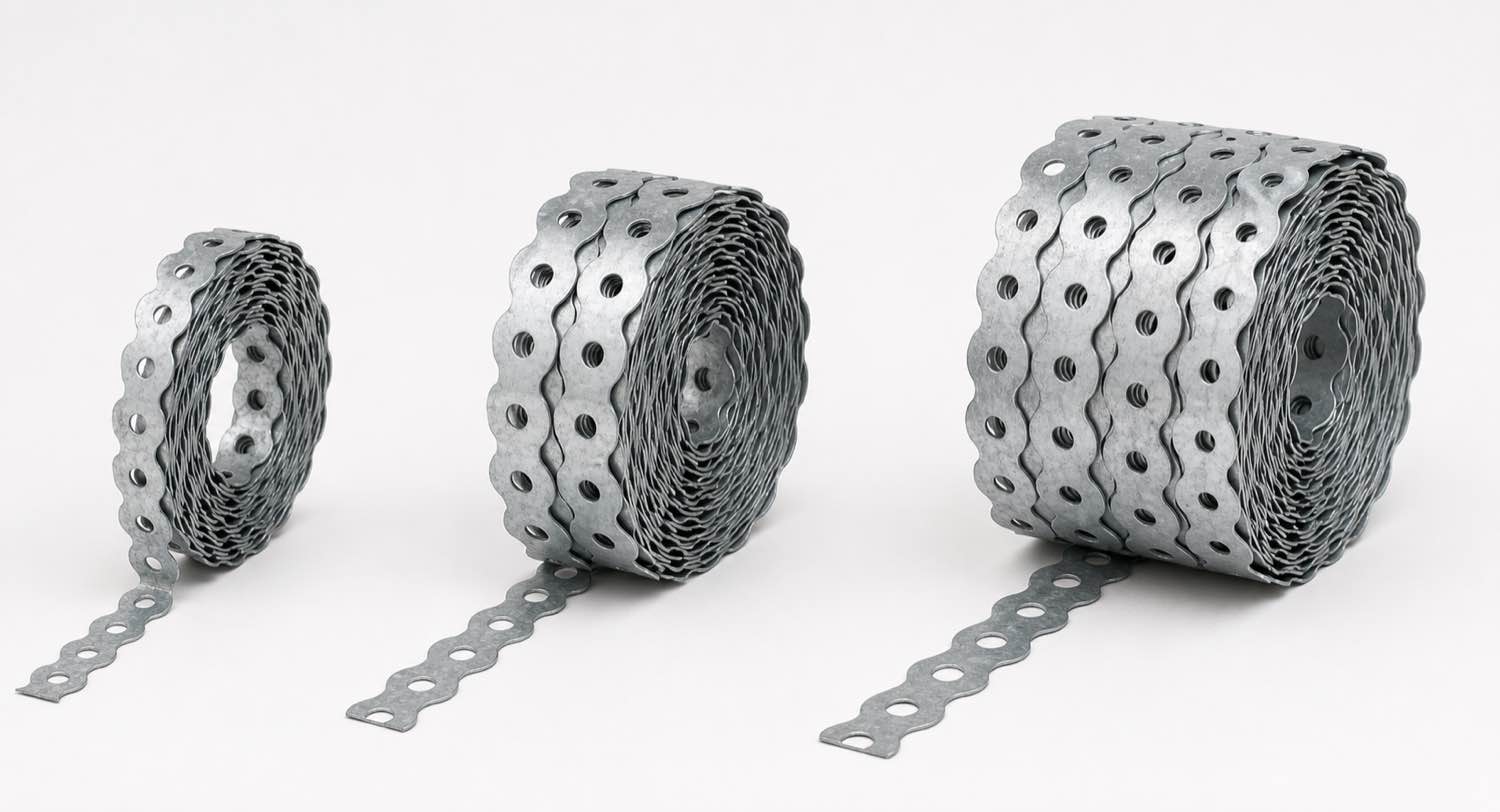
Why Perforated Hanger Strap Specifications Matter
For contractors, small differences are felt immediately during installation. A strap that is too light may twist or deform when pulled tight. A strap that is too thick may slow down cutting and bending. A hole pattern that does not match common fasteners can make a simple installation take longer than expected.
For distributors, the bigger issue is consistency. One good sample does not guarantee a smooth repeat order. Width, thickness, hole spacing, roll length, label information, and carton packing should remain stable from batch to batch.
Based on our manufacturing experience with hanger strap rolls for HVAC, plumbing, and hardware distribution, many complaints come from unclear specifications before production, not from the material alone.
The most important specifications include:
- Width
- Gauge or thickness
- Hole diameter
- Hole spacing
- Roll length
- Material
- Edge quality
- Surface coating
- Packaging style
Common Perforated Hanger Strap Sizes
Width is one of the first specifications buyers should confirm. It affects strength, flexibility, handling, packaging size, shipping weight, and product cost.
Common perforated hanger strap sizes include 3/4 inch, 1 inch, and 1-1/2 inch. Some buyers may also request custom widths depending on their local market or application.
| Width | Typical Application | Buyer Note |
|---|---|---|
| 3/4 inch | Light HVAC support, small pipe support, general fastening | Easy to cut and bend |
| 1 inch | Standard ductwork, plumbing, conduit, general support | Common distributor and contractor supply SKU |
| 1-1/2 inch | Heavier support or wider contact area | Better stability, higher material cost |
For many HVAC and hardware distributors, 1 inch galvanized hanger strap is often a practical standard SKU because it balances strength, flexibility, and market acceptance.
Narrower straps are easier to handle and may suit light-duty use. Wider straps provide more contact area and may be preferred for applications where installers want a stronger support appearance or added stability.
Hanger Strap Gauge and Thickness Explained
Many buyers ask whether 24 gauge or 28 gauge hanger strap is better. The better question is: who will use it, and for what type of installation?
A 24 gauge hanger strap usually feels firmer and is preferred when the buyer wants a stronger product appearance or more stable support. But it is also heavier, less flexible, and more expensive.
A 28 gauge hanger strap is easier to cut, bend, and pack. It can be suitable for light-duty applications or cost-sensitive retail channels. However, if the application requires stronger support, choosing a lighter gauge only to reduce cost may lead to complaints.
| Gauge | General Feature | Typical Use |
|---|---|---|
| 24 gauge | Thicker, firmer, more stable | Commercial HVAC, pipe support, heavier-duty fastening |
| 28 gauge | Lighter, easier to bend and cut | Light-duty HVAC, general fastening, retail markets |
For wholesale buyers, thickness consistency is just as important as the gauge itself. A supplier should be able to keep stable thickness from batch to batch, especially for repeat orders.
Factory note: In bulk orders, inconsistent thickness is easy for contractors to notice. The product may look similar in the carton, but installers can feel the difference immediately when cutting, bending, or fastening the strap.
Hole Diameter and Hole Spacing: Why They Matter
Hole spacing is often ignored in the first inquiry, but it affects the installer more than many buyers expect.
If the holes are not evenly punched, the installer may need to adjust the strap position repeatedly before fastening. If the hole diameter is too small, common screws, bolts, or anchors may not pass through smoothly. If the hole is too large, the contact area around the fastener may be reduced.
Buyers should confirm:
- Hole diameter
- Center-to-center hole spacing
- Hole shape
- Punching quality
- Burr control
- Hole alignment
Poor punching can also create sharp burrs around the hole. The product may still be usable, but it feels cheap and unsafe in the customer’s hand.
For wholesale orders, buyers should ask the supplier to confirm both hole diameter and hole spacing, especially when matching an existing product in the market.
Common Roll Lengths for Wholesale and Retail Packaging
Roll length is not only a label detail. It directly affects customer trust.
Common roll lengths include:
- 10 ft
- 25 ft
- 50 ft
- 100 ft
- Custom roll length
| Roll Length | Typical Buyer | Common Use |
|---|---|---|
| 10 ft | Retail users, small repair jobs | Light repair and small installations |
| 25 ft | Hardware stores, contractors | General HVAC and plumbing work |
| 50 ft | Contractors, distributors | Regular jobsite use |
| 100 ft | Wholesale buyers, commercial contractors | Bulk use and repeated installation work |
| Custom length | OEM/private label buyers | Market-specific packaging programs |
For example, if a 100 ft roll is consistently short, the problem may not be discovered during warehouse inspection. It is usually discovered by the contractor on the jobsite. By that time, the complaint goes back to the distributor.
This is why roll length control, roll winding tightness, and clear labeling should be checked before mass production, especially for private label or retail packaging programs.
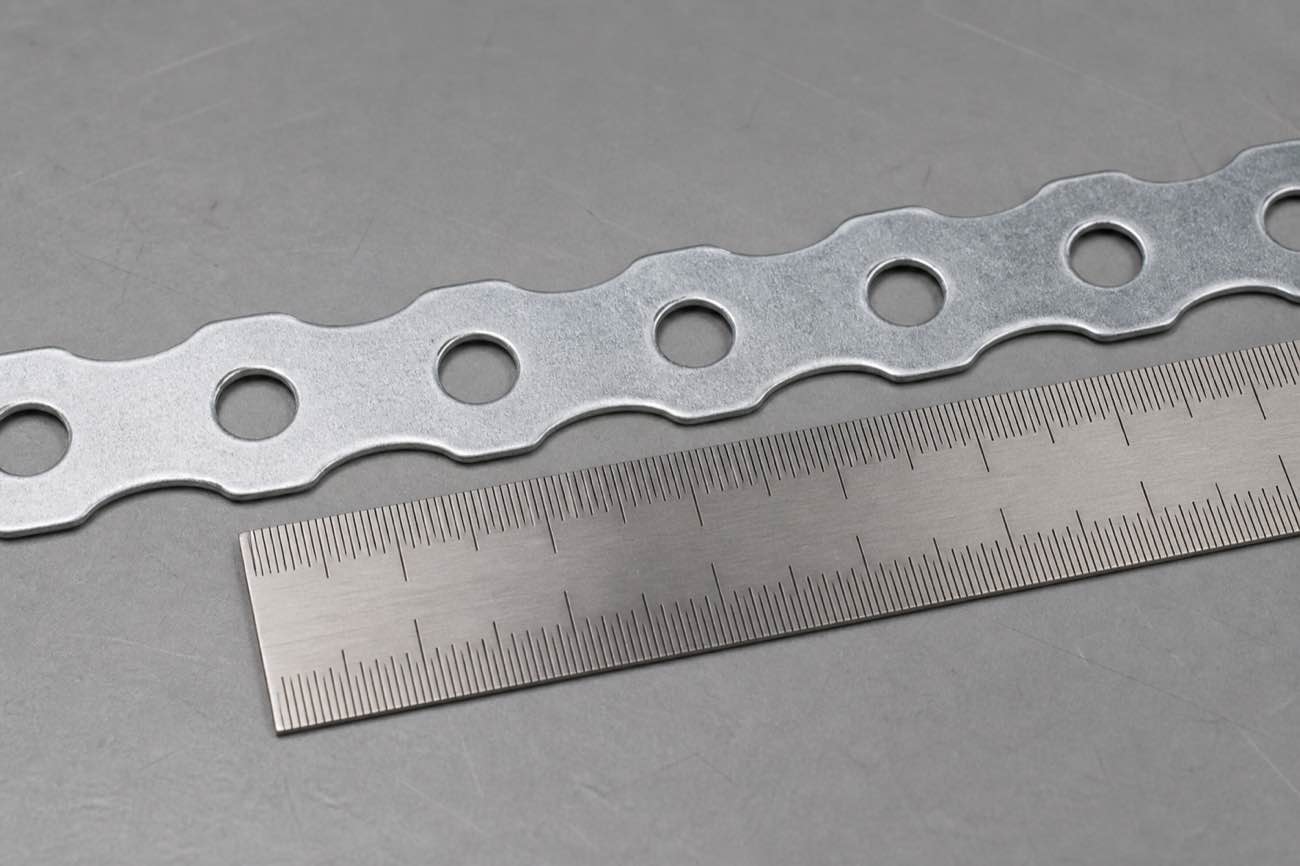
Galvanized vs Stainless Steel Hanger Strap Specifications
Material selection should depend on the application environment.
Galvanized perforated hanger strap is commonly used for standard indoor HVAC, plumbing, and general fastening applications because it offers a practical balance of cost and corrosion resistance.
Stainless steel perforated hanger strap is usually selected for outdoor, coastal, humid, or more demanding environments. It costs more, but it can reduce long-term corrosion risk in harsh conditions.
| Environment | Recommended Material | Reason |
|---|---|---|
| Indoor HVAC ductwork | Galvanized steel | Cost-effective and practical |
| General plumbing support | Galvanized or stainless steel | Depends on humidity and project needs |
| Mechanical rooms | Galvanized or stainless steel | Choose based on moisture exposure |
| Outdoor rooftop | Stainless steel preferred | Better long-term corrosion resistance |
| Coastal areas | Stainless steel 316 if required | Salt air is more aggressive |
| Industrial or corrosive areas | Stainless steel or special coating | Higher resistance may be needed |
Buyers should avoid assuming that one material fits all applications. The final choice depends on installation environment, fastening method, expected service life, and local project requirements.
If material selection is your main concern, our galvanized vs stainless steel hanger strap guide explains the difference in more detail.
Packaging Options for Retail and Wholesale Buyers
Packaging is not only about appearance. It affects storage, handling, retail display, barcode management, and customer experience.
For retail and distributor packaging, perforated hanger strap can be supplied in a flat cardboard dispenser box. The strap is packed inside the box, with a center hole or side slot that allows the user to pull out the metal strap as needed.
This packaging style is useful for hardware stores and contractor supply channels because it keeps the roll protected, makes storage easier, and gives more space for private label stickers, barcode labels, and product specifications.
Buyers should confirm:
- Box size
- Roll length inside the box
- Label position
- Barcode requirements
- Private label design
- Carton quantity
- Export carton strength
- Pallet packing method
For wholesale cartons, strength matters. Weak cartons may look acceptable before shipment but can deform during stacking, handling, or long-distance transportation.
Recommended Specifications by Application
Different applications require different specification priorities.
| Application | Suggested Specification Direction | Buyer Note |
|---|---|---|
| Light HVAC ductwork | Galvanized steel, lighter gauge, standard width | Easy to cut and bend |
| Commercial ductwork | Wider or thicker galvanized strap | Better stability for larger installations |
| Plumbing pipe support | Galvanized or stainless steel | Choose based on humidity and load conditions |
| Electrical conduit support | Standard perforated strap with clean holes | Hole spacing and fastener fit are important |
| Outdoor installation | Stainless steel preferred | Better corrosion resistance |
| Coastal environment | Stainless steel 316 if required | Salt air requires stronger corrosion protection |
| Retail distribution | Standard galvanized roll sizes in dispenser boxes | Clear label and packaging matter |
| Wholesale distribution | Stable width, gauge, roll length, and carton packing | Repeat order consistency is critical |
For distributors, the best product line is often not too complicated. A practical stocking strategy may include one standard galvanized SKU, one lighter-gauge option, one heavier-gauge option, and one stainless steel option for outdoor or high-humidity markets.
For HVAC ductwork applications, buyers can also read our HVAC hanger strap selection guide for more installation-focused details.
What Distributors Should Confirm Before Bulk Orders
Before placing a bulk order, buyers should confirm more than the unit price. A low price may not be valuable if the product creates complaints, returns, or unstable repeat orders.
Use this checklist before confirming production:
| Item | What to Check |
|---|---|
| Width | Is the width suitable for the target application? |
| Gauge/thickness | Is the thickness consistent across batches? |
| Hole diameter | Does it fit common fasteners in your market? |
| Hole spacing | Is the spacing even and stable? |
| Edge quality | Are the edges smooth enough for handling? |
| Burr control | Are holes and edges free from sharp burrs? |
| Surface condition | Are there rust spots, scratches, or coating issues? |
| Roll length | Does the actual length match the label? |
| Roll winding | Is the roll tight, even, and easy to handle? |
| Packaging | Does it match retail, wholesale, or private label needs? |
| Carton strength | Is the carton suitable for export or warehouse handling? |
| Sample approval | Can samples be approved before mass production? |
| Repeat order consistency | Can the supplier maintain the same specification next time? |
For HVAC distributors and hardware wholesalers, repeat order consistency is often more important than a slightly lower first-order price.
For distributor purchasing details, see our duct hanger strap wholesale buying guide.
How to Send a Clear Inquiry to a Hanger Strap Manufacturer
A clear inquiry helps the manufacturer quote accurately and recommend the right specification. Instead of asking only for “hanger strap price,” buyers should provide detailed requirements.
When sending an inquiry, include:
- Material: galvanized steel, stainless steel 304, or stainless steel 316
- Width
- Gauge or thickness
- Hole diameter
- Hole spacing
- Roll length
- Quantity
- Packaging style
- Roll label requirements
- Carton label or barcode requirements
- Private label or OEM packaging needs
- Destination market
- Required lead time
Example inquiry:
“We are looking for galvanized perforated hanger strap rolls for HVAC distribution. Required width is 1 inch, roll length 100 ft, with clean round holes and flat cardboard dispenser box packaging. Please provide available gauge options, MOQ, lead time, and sample availability.”
This type of inquiry allows the supplier to respond with useful details instead of a generic price.
how to choose a hanger strap supplier
Common Mistakes to Avoid
When buying perforated hanger strap wholesale, avoid these common mistakes:
- Choosing only based on the lowest price
- Not confirming thickness tolerance
- Ignoring hole spacing and fastener compatibility
- Using too light a gauge for heavier applications
- Choosing galvanized steel for highly corrosive environments without evaluation
- Not checking roll length accuracy
- Ignoring edge burrs and hole burrs
- Forgetting label, barcode, and carton requirements
- Placing a bulk order without sample approval
- Assuming the next order will match the first order without clear specifications
A well-defined specification helps both the buyer and the manufacturer avoid misunderstandings before production.
FAQ About Perforated Hanger Strap Specifications
What are the most common perforated hanger strap sizes?
Common sizes include 3/4 inch, 1 inch, and 1-1/2 inch widths. Roll lengths often include 10 ft, 25 ft, 50 ft, and 100 ft. Custom widths and roll lengths may also be available depending on the manufacturer.
Is 24 gauge or 28 gauge hanger strap better?
Neither is always better. 24 gauge hanger strap is usually thicker and more stable, while 28 gauge hanger strap is lighter and easier to bend. The right choice depends on the application, installation method, cost target, and market demand.
Why is hole spacing important?
Hole spacing affects installation speed and fastener alignment. If the spacing is inconsistent, installers may have difficulty positioning screws, bolts, or anchors. Stable hole spacing is especially important for repeat use across multiple jobsites.
Can galvanized hanger strap be used outdoors?
Galvanized hanger strap may be used in some general exposed environments, but for long-term outdoor, coastal, humid, or corrosive conditions, stainless steel is usually preferred. Buyers should choose material based on the actual environment and project requirements.
What should distributors check before buying hanger strap wholesale?
Distributors should check width, gauge, hole diameter, hole spacing, edge quality, burr control, roll length accuracy, surface condition, packaging, labeling, carton strength, and repeat order consistency.
Can perforated hanger strap be customized?
Yes. Many manufacturers can support custom width, roll length, material, label, carton, barcode, and private label packaging. Buyers should confirm MOQ and sample approval before mass production.
Final Thoughts
Perforated hanger strap is a small product, but unclear specifications can create real problems in bulk orders. Before comparing prices, buyers should first confirm the specification they actually need.
For a clear quotation, send the required material, width, gauge or thickness, hole size, hole spacing, roll length, packaging style, and order quantity. If you are matching an existing product from your market, a sample or detailed photo can also help avoid misunderstandings before production.
Final support performance depends on strap thickness, fastening method, installation spacing, load condition, and local code requirements. Buyers should always confirm the final application requirements before placing bulk orders.

10 Best Steel Strapping Suppliers in 2026: Rated and Compared
Introduction Choosing among steel strapping suppliers in 2026 comes down to one honest question: are you buying a commodity band, a strapping system, or a private-label product? The answer decides which supplier is actually right for you — a global packaging house...
12 Best Metal Strap with Holes in 2026: Rated and Compared
Introduction A metal strap with holes — perforated hanger strap, plumber's tape, pipe strap — is one of the cheapest products on a truck and one of the easiest to buy wrong. The wrong gauge sags under a water line; the wrong coating rusts through in a crawl space; the...
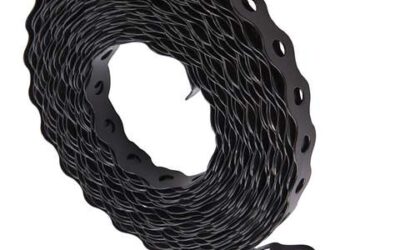
Perforated Hanger Strap vs Tube Strap: A Distributor’s Guide to Quoting the Right Product
Two Products, One Word: Why Distributors Get Them Mixed Up The perforated hanger strap vs tube strap question is simpler than it looks, and getting it wrong is expensive: ask a new purchasing clerk for "steel strap" and you may receive either of two completely...

Justin Wong
Hi, I’m Justin, the technical engineer of Jiangmen Masters. We’ve been running a factory in China that makes metal hanger strap for 16 years now, and the purpose of this article is to share the knowledge related to metal hanger strap from a Chinese supplier’s perspective.