
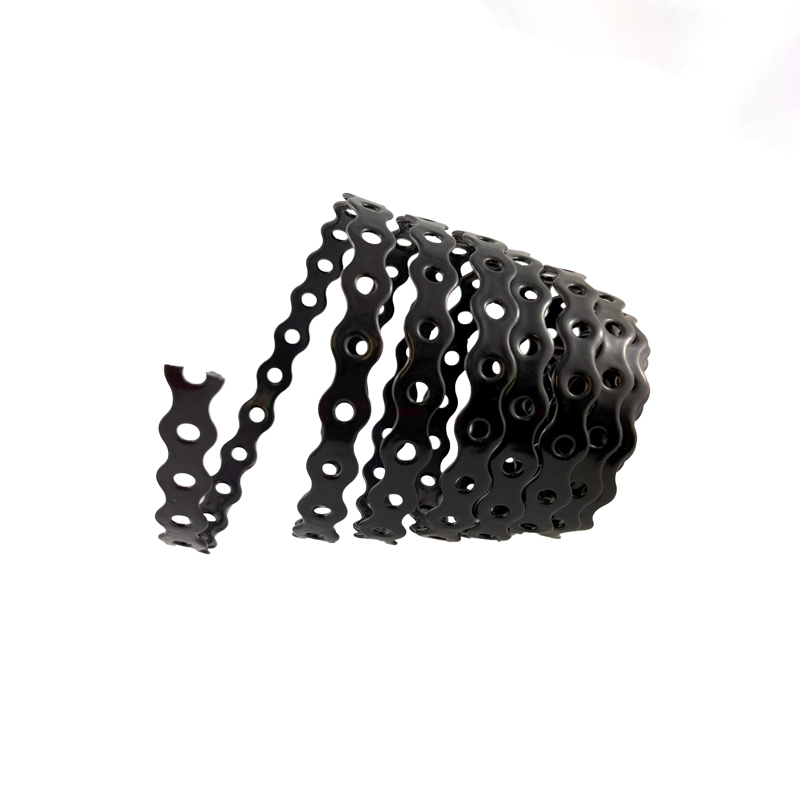
Perforated hanger strap burr inspection is the cheapest quality insurance a distributor or mechanical contractor can buy. In 16 years of making steel strapping at Jiangmen Masters, we have watched one skipped check on punched holes turn a whole container of hanger strap into a return claim: a burr the installer feels on the first pull.
Why Burrs Decide Whether a Batch Ships or Comes Back
A burr is displaced metal left at the edge of a punched hole or a slit edge, and on hanger strap it creates three problems at once. Safety first: installers pull strap through hangers barehanded, and a sharp burr turns routine HVAC or plumbing work into a cut hazard. Then function: a raised ring around a hole keeps a bolt or screw head from seating flush, so the joint works loose under vibration. Finally, corrosion: galvanized strap depends on an unbroken zinc layer, and a raised edge that scrapes it in handling becomes a rust initiation point in humid ceiling voids.
How Burrs Form: Die Clearance, Tool Wear, and Slitting
Burrs are almost never random — they come from the punching tool. The die clearance, the gap between punch and die measured per side, is the root variable. For low-carbon cold-rolled strip of 0.4-0.6 mm (28-24 gauge), correct clearance is roughly 5-10% of strip thickness per side. Open the gap beyond that and the steel tears instead of shears, leaving a heavy, curled burr on the exit side. Too tight, and the punch chips and wears. A punch that has run millions of strokes develops a rounded cutting edge — the first sign is the same as on site: the burr comes back. A dull slitting knife does the same at the long edges, leaving whiskers that survive punching.
Six Field Checks Before You Accept a Lot
These checks take one person about ten minutes per pallet: run them on the first roll of every lot and one random roll from every other pallet.
1. The Cotton Glove Test
Put on a clean cotton inspection glove and draw your fingertips along both faces of the strap, across every row of holes, and down both long edges; flip and repeat. If the fibres catch anywhere, the lot fails. Cotton finds burrs down to 0.05 mm that a calloused fingertip misses, and costs less than one returned box.
2. Burr Height Limits
Feel is a screen, not a verdict — measure what catches the glove. Lay the strap on a flat plate and read from the strap surface to the top of the burr with a dial indicator. Practical limits: maximum 0.10 mm (0.004 in) for strap up to 0.6 mm thick, and 0.15 mm (0.006 in) for 0.6-1.0 mm stock — in other words, burr height should not exceed about 10% of strip thickness. Reject any curled or folded burr whatever it measures — it still catches gloves and blocks fastener seating.
3. Hole Condition and Roundness
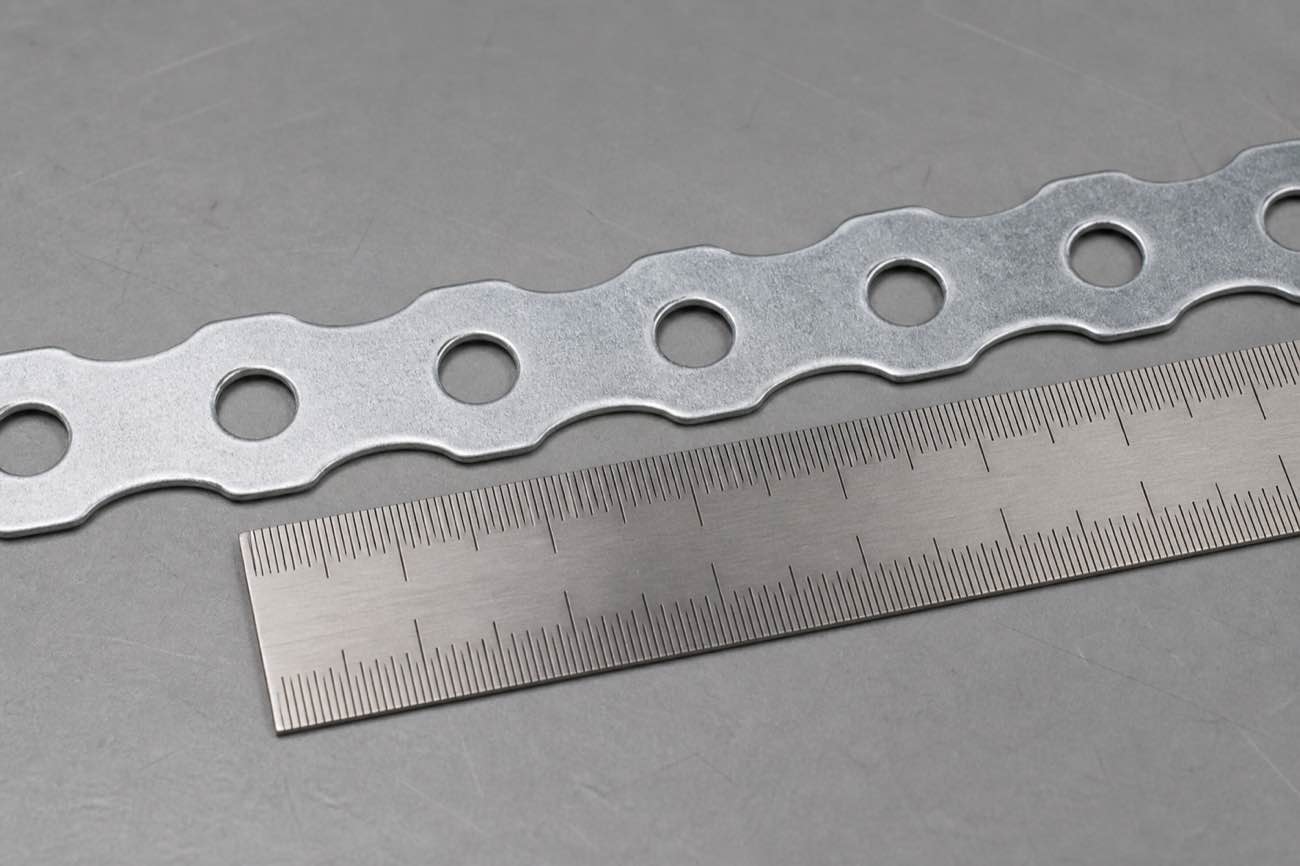
Light-check ten consecutive holes. A good punched hole is round with a clean shear band and no tear. Reject lots with oval holes more than 0.15 mm off nominal diameter, half-sheared slugs still attached, or heavy mushrooming on the exit face. Spacing drift warns of die plate wear — on standard 9/32 in holes at 1-1/4 in centres, more than ±0.8 mm per pitch means the tooling is tired.
4. Slit Edge Quality
Sight along the strip against a straight edge. Edges should be square and free of whiskers, hooks, and torn slivers; a dull slitting knife shows as a torn edge that reflects light unevenly. Run the glove test specifically on the long edges, because those are what installers hold. Edge condition matters most on coated fixing band, where a raised edge telegraphs through the coating and peeling starts within weeks.
5. Coating Continuity at the Punched Edge
Strap punched after galvanizing has bare steel on every hole wall; the surrounding zinc protects it sacrificially. What you are screening for is coating damage: a heavy burr scrapes zinc away in handling and leaves rust freckles at hole edges on new stock. On G60 or G90 zinc coating per ASTM A653, expect smooth, continuous coating within 2 mm of every punched edge. The full verification method is in our galvanized hanger strap coating inspection guide.
6. Fastener Seating Test
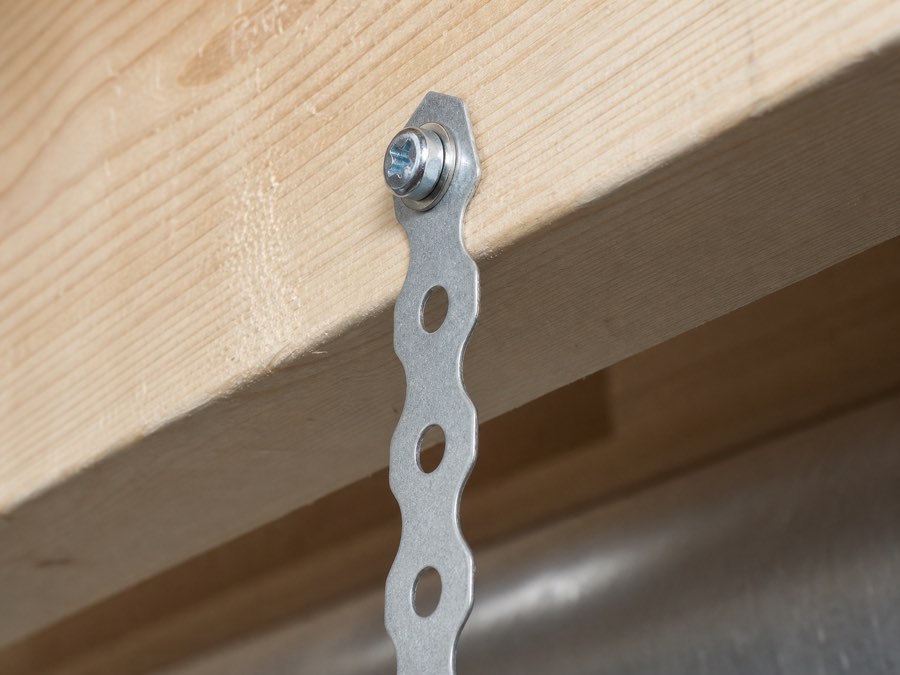
Seat the actual fastener you will use — a 1/4 in hex screw, saddle clamp bolt, or hammer-set nail — through the hole. It should drop in cleanly, and the head or washer must contact the strap face all the way around. If the fastener cocks or stands proud on one side, there is a burr ring underneath. Uneven seating directly reduces clamping force — the reason this test matters most for saddle clamps and fixing bands.
Acceptance Criteria Worth Putting in a Purchase Order
Write the numbers into the PO and the argument ends at the dock — our published tolerances are on the specification page, and the underlying numbers are in our perforated hanger strap specifications guide.
- Burr height: ≤0.10 mm (0.004 in) on strap ≤0.6 mm; ≤0.15 mm (0.006 in) on 0.6-1.0 mm stock
- No curled, folded, or sliver-type burrs anywhere on either face
- Hole diameter ±0.15 mm; spacing ±0.8 mm per pitch
- Slit edges square and free of whiskers
- Zinc coating G30/G60/G90 per ASTM A653, continuous within 2 mm of punched edges
- Cold-rolled low-carbon steel with tensile strength in the 270-410 MPa range
What Skipping Inspection Actually Costs
One distributor we supply learned this the expensive way. A lot that would have needed a 15-minute check at the port instead reached a hotel renovation site, where the first crew report was torn gloves and a stop-work order. The result: return freight, de-burring, re-coiling, and re-inspecting at 30-50% of product cost, three weeks of delay on a construction project, and a lost repeat order. Hand injuries add costs no PO shows: first-aid time, paperwork, and a crew that no longer trusts your product.
How Jiangmen Masters Controls Burrs at the Source
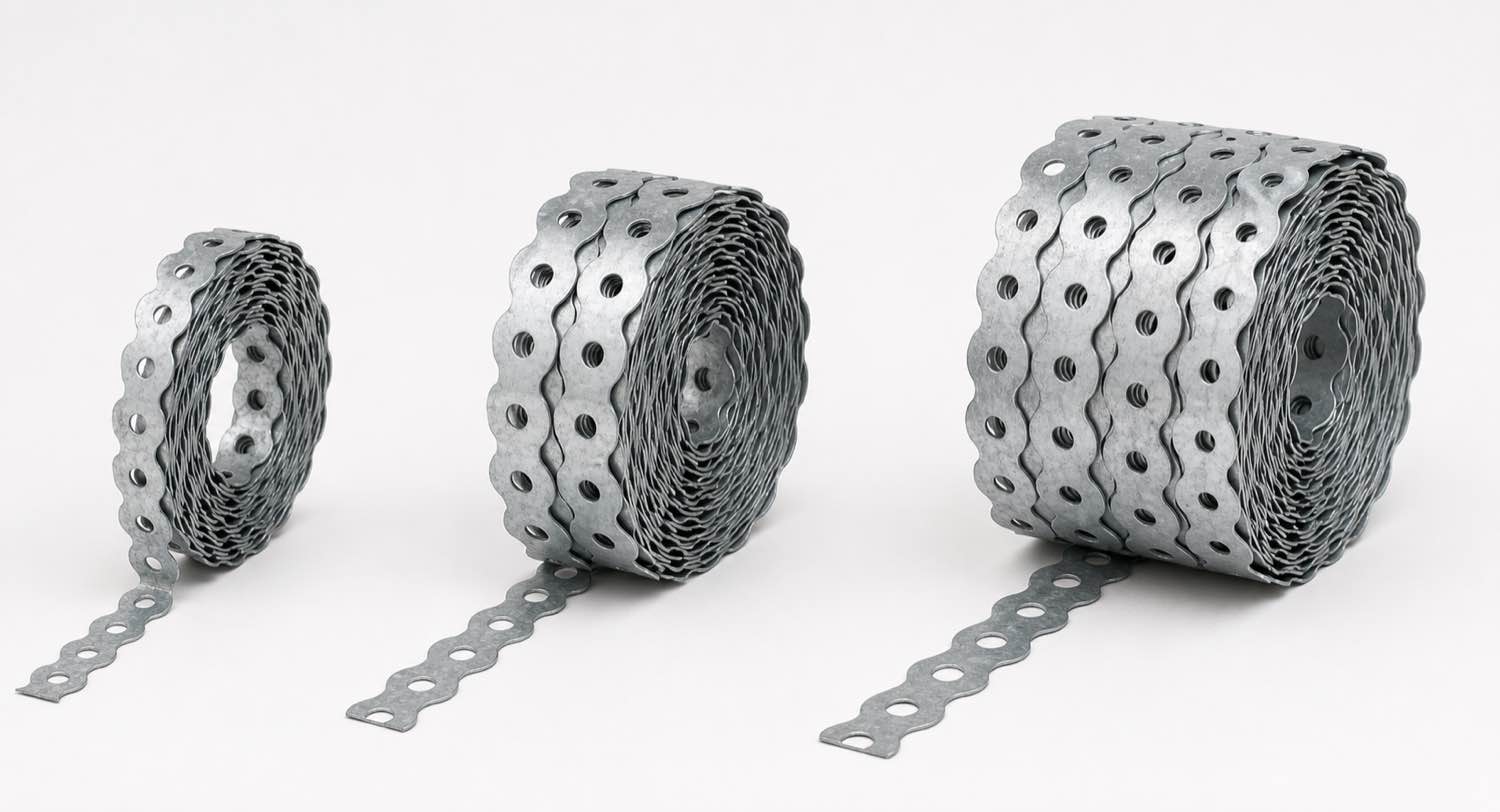
After 16 years of punching strap, we treat burr control as tooling discipline, not luck. Coils are inspected for hardness, thickness, and surface before they reach the die. Dies run with clearance held at 5-10% of strip thickness per side, recorded per tool. Tooling is maintained by stroke count, not by feel, with a first-article inspection every shift and burr-height sampling every 30 minutes. Every roll gets a final glove test before packing. Where hole-edge protection matters, we punch before galvanizing so the zinc flows into the hole walls. The same discipline applies across our perforated hanger strap, fixing bands, and copper hanger strap.
Frequently Asked Questions
What is perforated hanger strap burr inspection?
The field and in-process checks used to judge punched-hole and edge quality before a lot is accepted: the cotton glove test, burr height measurement, hole and edge condition, coating continuity, and fastener seating.
What burr height is acceptable?
For strap up to 0.6 mm thick, reject anything above 0.10 mm (0.004 in), and above 0.15 mm (0.006 in) for 0.6-1.0 mm stock. A practical ceiling is 10% of strip thickness — and a curled burr fails whatever it measures.
What causes burrs on perforated strap?
Worn or incorrectly cleared tooling. Die clearance beyond about 10% of material thickness per side tears the steel and raises heavy exit-side burrs; a dull punch or slitting knife makes them worse. A serious manufacturer can show you clearance records, not just samples.
Run a perforated hanger strap burr inspection on the first roll of every lot and you will never learn about a burr problem from a customer complaint. Jiangmen Masters has manufactured hanger straps, fixing bands, and steel strapping in Jiangmen, Guangdong since 2006 — contact us for samples, product catalogs, and tolerance data before your next order.