
Updated: July 1, 2026
Many buyers search for 28 gauge thickness because they need to compare metal thickness before choosing hanger strap, fixing band or perforated metal strap. In many U.S. sheet-steel gauge references, 28 gauge steel is commonly listed at about 0.0149 in. / 0.38 mm, while 24 gauge steel is commonly listed at about 0.0239 in. / 0.61 mm.
These are nominal reference values, not measured thicknesses or load ratings for a specific hanger strap. For purchasing, buyers should confirm actual measured thickness, finished width, hole diameter, hole pitch, material, surface finish, roll length and packaging before ordering.
Understanding Gauge and Actual Thickness
Gauge is a traditional way to describe sheet metal thickness. For steel sheet, a lower gauge number usually means thicker metal. That means 24 gauge is thicker than 28 gauge.
Gauge is not a universal global thickness unit. Sheet steel, galvanized steel, stainless steel and aluminum may use different gauge references. Coating, tolerance and production method can also affect the actual measured thickness.
For hanger strap orders, gauge should be treated as a reference, not the final specification. Always confirm the actual thickness in mm or inches.
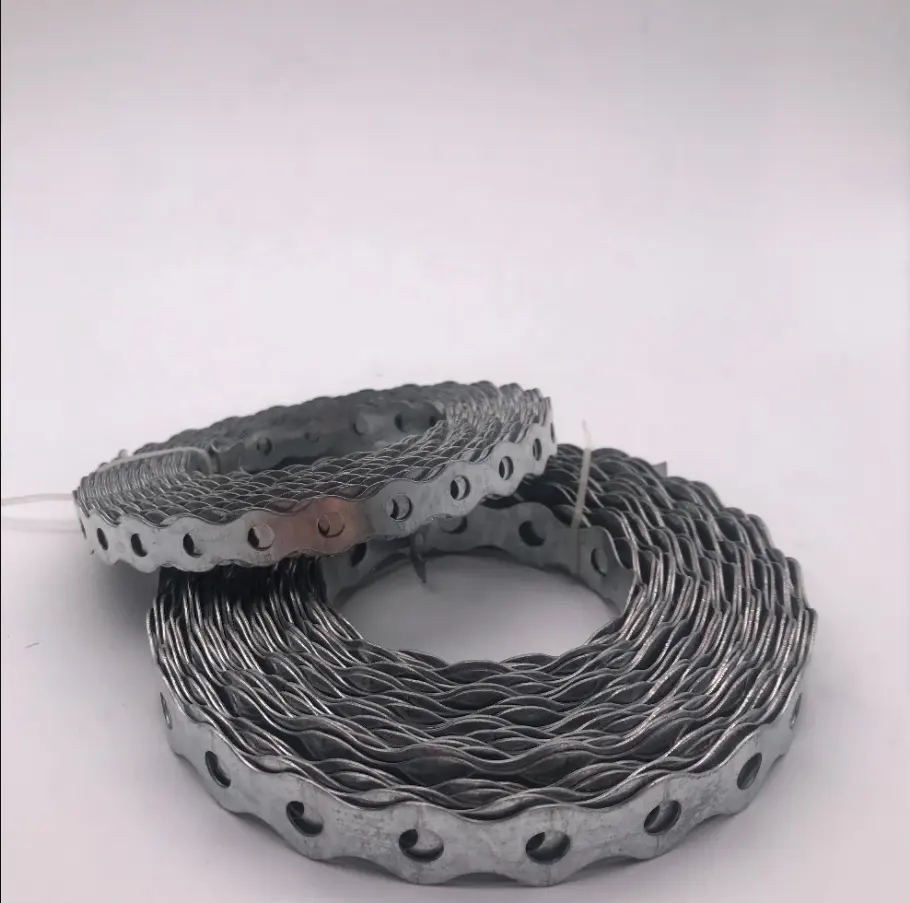
28 Gauge vs 24 Gauge Thickness Reference
| Gauge | Common steel sheet reference thickness | What it means for hanger strap |
|---|---|---|
| 28 gauge | About 0.0149 in / 0.38 mm | Thinner, easier to bend, often considered for lighter-duty fixing |
| 24 gauge | About 0.0239 in / 0.61 mm | Thicker, more rigid, often chosen when a stiffer strip is preferred |
| Important note | Confirm actual measured thickness | Gauge is not a load rating |
Values are common nominal sheet-steel references. Actual product thickness can vary by manufacturer, material, coating and tolerance.
24 Gauge vs 28 Gauge Hanger Strap: Practical Differences
In the realm of metal hanger straps, two gauges stand out: 24-gauge and 28-gauge. While they may seem like just numbers, the difference in thickness between these two gauges can significantly impact the performance and suitability of the straps for various applications.
24-Gauge Metal Hanger Straps: The Heavyweight Champion
24 gauge hanger strap is thicker and generally more rigid than 28 gauge when comparing the same material and design. It may be preferred when buyers want a stronger-feeling strip, better shape retention or a heavier specification for contractor supply.
28 gauge hanger strap is thinner and easier to form. It may be suitable for lighter-duty fastening, retail packaging, DIY use or applications where easier bending and lower material weight are important.
Neither gauge should be treated as a load rating by itself. Final performance depends on material, width, hole pattern, fasteners, substrate and installation conditions.
How to Choose Between 24 Gauge and 28 Gauge
Choose by application, handling and purchasing requirements, not gauge alone.
– For easier bending and light-duty fixing, 28 gauge may be suitable.
– For better rigidity and a thicker strip feel, 24 gauge may be more suitable.
– For retail packaging, buyers may care about roll length, label, carton size and easy handling.
– For contractor supply, buyers may care more about thickness consistency, edge condition and repeat-order stability.
– For corrosive or outdoor environments, material and surface finish matter more than gauge.
Why Gauge Alone Does Not Define Strength
Gauge is a thickness reference, not a load rating. A 24 gauge strap is generally thicker and stiffer than a 28 gauge strap when comparing the same material and design, but safe performance depends on the manufacturer’s data, material grade, strap width, hole pattern, fasteners, attachment surface, installation method, corrosion condition and applicable project requirements.
Do not use hanger strap for lifting, life-safety, structural or overhead load applications unless the specific product is rated and approved for that use.
For more detail on gauge, fasteners and installation variables, read how strong perforated hanger strap really is.
Specification Checklist Before Ordering
Before sending an inquiry, confirm:
– Actual measured thickness
– Finished width
– Gauge reference
– Hole diameter
– Center-to-center hole pitch
– Material and surface finish
– Roll length
– Roll length tolerance
– Edge condition
– Packaging method
– Label requirements
– Estimated quantity
– Whether samples are needed before bulk order
– Whether test data are required for the intended use
To quote accurately, please share thickness, width, hole size, hole pitch, roll length, material, finish and estimated quantity.
For a broader specification checklist, see our guide to perforated hanger strap specifications.
For more detail on gauge, fasteners and installation variables, read how strong perforated hanger strap really is.
Frequently Asked Questions
How thick is 28 gauge metal?
In many U.S. sheet-steel gauge references, 28 gauge steel is commonly listed at about 0.0149 in. / 0.38 mm. Actual thickness can vary by material, coating and tolerance.
What is 28 gauge in mm?
28 gauge steel is commonly referenced at about 0.38 mm, but buyers should confirm actual measured thickness before ordering.
How thick is 24 gauge metal?
24 gauge steel is commonly referenced at about 0.0239 in. / 0.61 mm. Actual product thickness may vary by supplier and material.
Which is thicker, 24 gauge or 28 gauge?
24 gauge is thicker than 28 gauge when comparing the same material reference.
Can I use gauge as a load rating?
No. Gauge is a thickness reference, not a load rating. Use only verified product data for the exact strap and installation condition.
Conclusion
28 gauge and 24 gauge are useful thickness references, but they should not be the only basis for choosing hanger strap. 28 gauge is thinner and easier to form, while 24 gauge is thicker and more rigid when comparing the same material and design.
For B2B purchasing, confirm actual measured thickness, width, hole pattern, material, surface finish, roll length, packaging and intended application before ordering. For load-related use, rely on verified product data rather than assuming capacity from gauge.

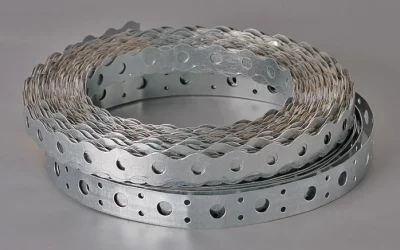
10 Best Fixing Bands in 2026: Rated and Compared
Introduction Fixing bands — all-round band, suspension band, perforated fixing band — are the Swiss army knife of mechanical and electrical installation: a thin galvanized steel strip with pre-punched holes that bends into brackets, wraps around pipe, hangs cable...
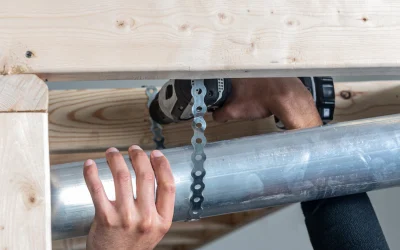
10 Best Steel Strapping Suppliers in 2026: Rated and Compared
Introduction Choosing among steel strapping suppliers in 2026 comes down to one honest question: are you buying a commodity band, a strapping system, or a private-label product? The answer decides which supplier is actually right for you — a global packaging house...
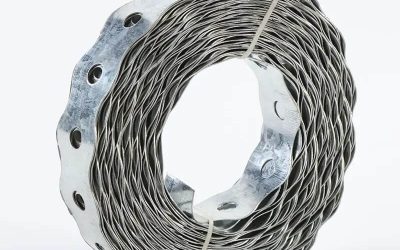
12 Best Metal Strap with Holes in 2026: Rated and Compared
Introduction A metal strap with holes — perforated hanger strap, plumber's tape, pipe strap — is one of the cheapest products on a truck and one of the easiest to buy wrong. The wrong gauge sags under a water line; the wrong coating rusts through in a crawl space; the...

Justin Wong
Hi, I’m Justin, the technical engineer of Jiangmen Masters. We’ve been running a factory in China that makes metal hanger strap for 16 years now, and the purpose of this article is to share the knowledge related to metal hanger strap from a Chinese supplier’s perspective.